Learning Today. Protecting Tomorrow.
LEARN • OBSERVE • SHARE
PigBait Young Contributors encourages the next generation of farmers, ranchers, wildlife professionals, scientists, and conservationists to explore the natural world through education, observation, and shared knowledge.
Whether learning on a family farm, working alongside experienced landowners, or studying wildlife in school, young people have valuable opportunities to develop their understanding of wildlife and responsible land management.
LEARN — Discover the Science
Explore the fascinating world of wild pigs, wildlife biology, agriculture, and conservation. Discover how animals interact with their environments, how wildlife affects farms and natural habitats, and how scientists investigate important environmental questions.
Through engaging educational activities, young contributors will learn to ask questions, evaluate evidence, and develop a deeper understanding of responsible wildlife and land management.
OBSERVE — Discover Through Experience
Observation is one of the most important skills in understanding wildlife and the natural world.
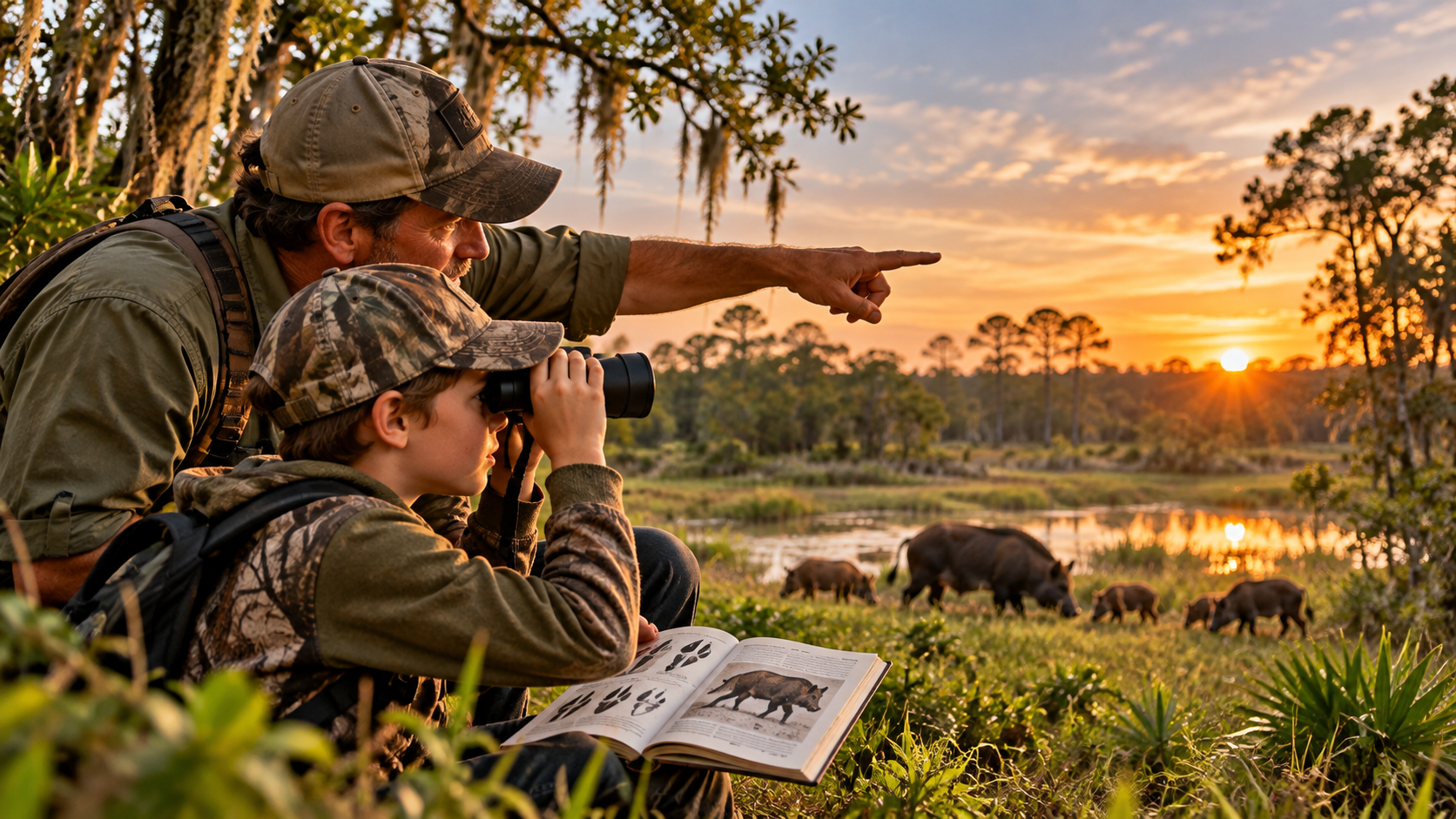
Young contributors can learn to recognize animal tracks, identify signs of wildlife activity, observe changes in habitats, and understand how animals interact with farms, forests, and natural environments.
Whether exploring with a parent, learning alongside a teacher, or participating in a supervised outdoor activity, careful observation encourages curiosity, patience, and scientific thinking.
Safety always comes first. Wildlife observations should be conducted from a safe distance with appropriate adult supervision.
SHARE — Every Observation Begins a Conversation
Knowledge becomes more valuable when it is shared.
PigBait Young Contributors encourages young people to develop the confidence to ask questions, discuss observations, and learn from experienced farmers, ranchers, wildlife professionals, educators, and scientists.
Through supervised educational activities, young people can discover how their observations contribute to a greater understanding of wildlife, agriculture, and conservation.
As the program develops, opportunities for sharing educational experiences will be introduced with appropriate parental involvement, privacy protections, and editorial oversight.
Our First Educational Activities
Activity 1 — Reading the Landscape
The landscape tells a story. Animal tracks, disturbed soil, damaged vegetation, and other signs can reveal how wildlife moves through and interacts with its environment.
In this activity, young learners discover how to recognize signs of wild-pig activity, including rooting, tracks, and wallows. They learn to record observations, ask questions, and consider what those signs reveal about animal behavior.
Activities should take place with appropriate adult supervision. Young people should never approach wild pigs or investigate potentially dangerous areas.
Activity 2 — Wild Pigs and the Environment
Wild pigs can have a significant impact on farms, forests, waterways, and natural habitats. Their feeding and rooting activities can damage crops, disturb soil, affect water quality, and disrupt native plants and wildlife.
In this activity, young learners explore the relationship between wild pigs and the environment. They discover how changes in one part of an ecosystem can affect other plants, animals, and natural resources.
Through guided discussion, observation, and age-appropriate research, students begin to understand why responsible wildlife management and environmental conservation are important.
Activity 3 — Think Like a Scientist
Every scientific discovery begins with curiosity and a question.
In this activity, young learners explore how scientists study wildlife and the natural world. They practice making observations, asking questions, developing possible explanations, and examining evidence before reaching conclusions.
Using examples from wild-pig behavior, agriculture, and conservation, students discover the importance of careful observation, reliable information, and critical thinking.
The goal is not simply to find answers, but to develop the confidence and skills to investigate questions responsibly and thoughtfully.
For Educators, Scientists, and Wildlife Professionals
PigBait Young Contributors is being developed with the belief that education benefits from the combined knowledge and experience of teachers, scientists, farmers, ranchers, wildlife professionals, and conservation specialists.
We welcome the interest of professionals who recognize the importance of introducing young people to wildlife science, agriculture, environmental stewardship, and responsible land management.
As the program develops, we hope to establish an Educational Advisory Circle to help review learning materials, recommend educational activities, and ensure that information presented to young learners is accurate, engaging, and age-appropriate.
Our goal is to build a thoughtful educational resource that connects professional knowledge with the curiosity of the next generation.
A Safe Place to Learn
The safety, privacy, and well-being of young learners are fundamental to PigBait Young Contributors.
Our educational resources are intended to encourage curiosity and learning in a safe, supportive environment. Parents, guardians, and educators play an essential role in guiding young people’s participation, particularly during outdoor observations and wildlife-related activities.
Educational materials will be freely available without requiring children to register or provide personal information.
Any future opportunities for young people to contribute observations or educational experiences will be introduced only after appropriate parental consent procedures, privacy protections, age-appropriate safeguards, and editorial oversight have been established.
PigBait does not currently offer youth account registration or direct submissions from minors through this program.
Looking Toward Tomorrow
The future of wildlife management, agriculture, and conservation will depend on the knowledge, curiosity, and commitment of the next generation.
PigBait Young Contributors is an investment in that future. By encouraging young people to learn, observe, ask questions, and think critically, we hope to inspire tomorrow’s farmers, ranchers, scientists, wildlife professionals, and conservation leaders.
Every discovery begins with curiosity. Every meaningful contribution begins with learning.